If you search for a "fast first aid course near me", you will certainly locate lots of deals: express first aid in half a day, fast CPR correspondence course in 2 hours, on-line concept adhered to by a fast sensible session. For hectic employees and employers under stress to meet conformity deadlines, these assurances are attractive. The huge concern is whether a fast first aid certificate actually prepares someone to act when a life is on the line.
I have actually spent years supplying first aid and CPR training to work environments, child care solutions, and area teams. I have actually seen people walk right into a fast first aid training session totally to tick a box, and go out shocked at how much they now notice around them: trip hazards, bronchial asthma flatterers without any spacers, elderly neighbours living alone. I have actually likewise seen the other side, where a rushed course left learners unable to keep in mind basic CPR steps just weeks later.
Time is a factor, but it is not the only factor. The design and shipment of the course issue even more than the variety of hours on the certificate.
What a First Aid Course Is Really Attempting To Achieve
Before judging fast first aid courses, it helps to be clear regarding what "reliable" suggests in this context. A great first aid and CPR course is not simply a lecture or a formality to satisfy regulatory authorities. It ought to achieve 3 things.
First, expertise: acknowledgment of common emergency situations such as heart attack, choking, stroke, anaphylaxis, severe bleeding, burns, seizures, asthma strikes, and head injuries. Students need to recognize priorities and understand when to call emergency situation services.
Second, hands‑on ability: the capability to begin CPR swiftly and with sensible quality, make use of an AED without hesitation, control severe bleeding, area somebody in the recuperation setting, and assistance breathing issues while help is on the means. For child care instructors, express childcare first aid training have to likewise cover paediatric CPR, choking in infants and youngsters, and allergic reaction and asthma management plans.
Third, confidence under stress and anxiety: the peace to act instead of freezing, and the judgment to adjust textbook actions to messy, real‑world scenes. That confidence does not appear from theory alone; it originates from reasonable method and positive feedback during training.
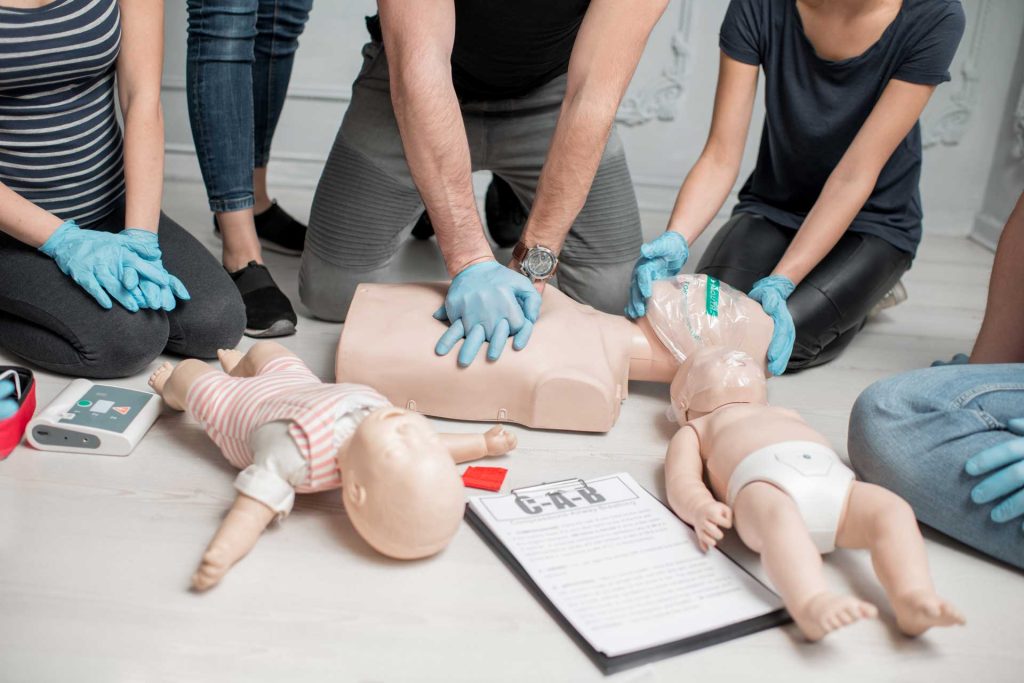
If a fast first aid course supplies all three outcomes, then the much shorter duration is not an issue. If it just covers theory at rate and rushes the functional elements, after that the certificate is bit greater than paper.
How "Fast" Are Fast First Aid Courses Really?
The phrase "fast first aid" covers a wide range of formats. Some examples I come across regularly:
A compressed express first aid course for individuals restoring their certificate. A lot of the web content is modification, and the students have actually seen it before.
Blended distribution where first aid concept is completed online, adhered to by a brief face‑to‑face session focused on CPR training, AED use, and assessment.
Fast CPR courses that only cover CPR and defibrillation, typically for workers that already hold a wider first aid certificate yet must refresh their CPR annually.
Express childcare first aid courses tailored to very early youth regulations, with pre‑course reading, scenario‑based workshops, and targeted assessments.
The small period listed on a course summary should not read as the only time you will spend discovering. In a modern-day first aid and CPR course, it is common for half the learning to take place prior to you even stroll right into the classroom, through on-line components, analysis, or workplace drills. A 3 hour face‑to‑face session paired with 3 to 4 hours of online work can be extra efficient than a freely structured 2 day course where individuals sit in a room and soak up little.
What matters is overall knowing time, how that time is used, and just how well it matches the learner's background.
Short Courses vs Multi‑day Training: What Truly Changes?
Multi day first aid courses certainly have benefits. There is even more time for repeating, more possibilities for concerns, and a slower speed that suits people who are anxious or unfamiliar with the web content. I have seen extremely worried individuals, particularly older adults or people that did not complete institution, blossom across 2 days as the product is duplicated and practiced.
On the various other hand, I have actually seen two day courses that waste time on lengthy video clips, off‑topic stories, or unstructured discussions. People are far from work and family members for an extended period, yet still leave unclear of the CPR compression ratio or the indications of stroke.
Fast first aid courses typically concentrate on efficiency. The content is tighter, the instructor maintains a brisk speed, and there is little space for drift. When this is done well, it values adult students: clear goals, relevant instances, concise explanations, instant practice. When done badly, it seems like cramming for an examination, click here with individuals replicating answers into a workbook they hardly understand.
From an abilities perspective, CPR is the clearest examination case. Research and experience both suggest that CPR quality begins to decrease simply a couple of months after training, despite whether a person did a lengthy or short course. That is why several workplaces timetable CPR correspondence course every year. The size of the initial course is less important than just how commonly skills are refreshed and practiced.
When Fast First Aid Training Works Well
Fast first aid and fast CPR courses can be extremely reliable in specific situations. When I see excellent end results from a brief format, some typical variables are present.
Learners are restoring, not learning from scratch. If somebody has currently finished a full first aid and CPR course within the previous few years, an express first aid refresher really feels acquainted. They remember the broad steps. The fast framework jogs their memory and develops method as opposed to frustrating them.
Pre course prep work is genuine, not token. In solid blended courses, learners complete interactive online components with inquiries, video clips, and scenarios prior to the class day. Fitness instructors can after that spend face‑to‑face time on inquiries, presentations, and reasonable simulations.

Group size is workable. Effective fast first aid training counts on great deals of brief, concentrated practice turnings. When there are a lot of individuals per manikin, or a solitary trainer is handling 20 individuals, weak students can conceal in the crowd and never ever obtain individual feedback.
Trainers are skilled and functional. A fast course increases or drops on the instructor's capacity to concentrate on what issues, adjust descriptions to the group, and punctured lingo. In my own CPR courses, I usually strip the message to one basic regulation for ordinary -responders: "Set on the upper body, very little disruptions, obtain the AED on as quickly as you can." Additional details are included just when the essentials are solid.
Workplaces support practice. In some organisations, initial aiders make use of manikins in short toolbox sessions, run mock drills, and review genuine incidents. A brief first course functions fine since it sits inside a living safety culture instead of being the only exposure to first aid and CPR.
In these contexts, fast first aid courses are not a faster way, they are a regimented way of delivering the very same learning outcomes in a tighter, adult‑friendly package.
When Fast First Aid Courses Loss Short
I have also strolled into firms that purchased the least expensive, fastest first aid certification readily available, and the gaps reveal instantly. In one case, a worker fell down with a seizure and none of the allegedly educated initial aiders knew to secure the head, time the seizure, or roll the individual when it finished. Their certifications were up to day, but their proficiency was not.
Compressed courses battle in a number of situations.
Complete beginners with low wellness proficiency. If somebody has actually never ever seen CPR executed, is unfamiliar with basic makeup, or really feels very uncomfortable around blood and injury, they normally require greater than a fast session to take in and incorporate first aid ideas. Anticipating them to come to be positive responders in a single express first aid course establishes them approximately fail.
People who fear or quickly bewildered. Some learners need time, repetition, and a risk-free room to ask what seem like "foolish" questions. In a fast first aid and CPR training class, they could drop quiet, let others answer, and leave without resolving their fears.
Complex office risks. High danger sectors such as warehouses, producing plants, remote worksites, or environments with chemical direct exposures often need scenario‑based practice that goes beyond generic first aid. Attempting to press that into a short session usually implies either the generic content, the workplace‑specific drills, or both are compromised.
Childcare and college atmospheres with unique wellness needs. Express childcare first aid courses can function well for seasoned instructors, however brand-new personnel entering very early childhood or impairment support duties gain from extra practice with bronchial asthma spacers, anaphylaxis strategies, seizure management, and the truths of emergency situations including children. That depth is tough to reach if every section is rushed.
Box ticking society. Where monitoring's single goal is "fast certification" at minimum expense, there is stress to do the bare minimum. People get here late, leave early, or work through the on-line element while distracted. The organisation can reveal auditors an impressive line of first aid certifications, however in an actual emergency situation, efficiency informs a various story.
Fast does not always suggest inefficient, but the danger of superficial learning is higher when no person is looking beyond the timetable.
What To Seek In a Fast First Aid or CPR Course
If you are taking into consideration a fast first aid course or express CPR course, you can swiftly separate serious companies from shallow ones by examining a few vital aspects.
Clear understanding outcomes instead of unclear assurances. Reliable providers name the certain units, such as typical office first aid or a comprehensive first aid and CPR course, and lay out both understanding and ability requirements.
Blended knowing with significant online web content. If you are expected to finish pre‑course theory, it should include inquiries, situations, and brief assessments, not just a PDF to skim. Excellent on-line components help you reach the express first aid training session all set to practice.
Real functional assessment, not just attendance. A fast CPR course should still need you to show uninterrupted compressions and ventilations for a sensible period, make use of an AED trainer, and take care of fundamental first aid situations. If a supplier hints that every person passes regardless of performance, deal with that as a warning sign.
Appropriate course dimensions and devices. Ask about the variety of individuals per manikin, specifically in CPR training. A ratio that enables you to spend just a couple of mins on the manikin is not enough.
Trainer experience and assistance. Experienced trainers will happily address thorough concerns about their first aid and CPR training classes. If the person on the phone can not discuss exactly how the course runs or sweep aside concerns with "it is all in the video", look elsewhere.
This quick checklist applies whether you are booking a one‑off express first aid course, setting up fast first aid training for a whole team, or searching for "fast first aid course near me" as an individual.
Can Someone Really Learn CPR in a Number Of Hours?
CPR is typically pointed out as the ability that allegedly can not be instructed appropriately in a short duration. My view is extra nuanced.
The standard electric motor sequence of CPR compressions, particularly upper body position and deepness, can be shown within mins. Individuals pick it up swiftly when they see and feel it. The obstacles are not normally technical but psychological: anxiety of damaging ribs, worry about doing it "incorrect", pain with mouth‑to‑mouth, or stress and anxiety regarding lawful consequences.
In a concentrated fast CPR course, a lot of the moment is invested overcoming those obstacles. Learners press on a manikin until they discover the rhythm and depth. They experiment face guards or with compression‑only CPR, talk about local guidelines, and talk through real incidents. By the end, nearly everyone in the area can deliver practical top quality CPR.
The constraint depends on retention. Any type of CPR training, whether two hours or eight, fades if it is not revitalized. That is why numerous guidelines suggest refresher CPR training every year, also if formal first aid certificates stay valid much longer. Some markets are moving to much shorter however much more frequent CPR sessions, for example a quarterly fast CPR refresher course of 30 to 45 mins embedded into safety and security meetings.
So yes, somebody can learn functional CPR in a number of hours, as long as that discovering is strengthened frequently. The problem is not the fast style, it is the one‑off nature of much first aid and CPR training.
Special Case: Express Child Care First Aid Courses
Childcare and college environments add emotional weight and details dangers. When something fails with a kid, also experienced grownups can panic. Laws in lots of regions require very early childhood years teachers to keep existing first aid and CPR certifications, commonly with added modules in bronchial asthma and anaphylaxis.
Express childcare first aid courses have grown in response, encouraging coverage of paediatric first aid in a single day, frequently with pre‑course e‑learning. I have actually trained many instructors with this format. When the course is designed well, it is highly useful: choking drills with infant manikins, role‑plays of epi‑pen management, mock playground occurrences, and discussions of genuine cases.

The express style suits teachers that currently handle small injuries day-to-day and simply require structured training, legal clearness, and accredited skills. It is less optimal for new personnel who have never held an unresponsive baby or seen a severe allergy. For them, extra mentorship in the work environment is vital, along with the formal express child care first aid course.
A strong childcare‑focused program covers not just emergency situations, yet prevention. Simple steps such as supervising consuming, saving nuts firmly, and maintaining asthma action plans probably avoid even more occurrences than any kind of dramatic resuscitation. The very best express childcare first aid training includes these daily practices rather than focusing exclusively on worst‑case scenarios.
Fast Courses, Real Emergencies: What Actually Happens
When you run first aid courses for long enough, you listen to back from individuals that had to utilize their skills. These tales are my actual test of whether fast first aid courses work.
One office worker who finished a blended first aid and CPR course defined walking right into a fitness center changing room to locate a guy collapsed and not breathing typically. He bore in mind the simple chain: check action, phone call for help, begin compressions, obtain the AED. The real sequence was unpleasant, but he kept going till paramedics arrived. His training session had actually lasted a solitary full morning, incorporated with online concept the week before.
Another pupil participated in a fast CPR training class on a Friday and used it on Monday, when a kid choked at a household barbecue. Her hands trembled, however she recalled the steps for choking in kids and cleared the obstruction. That course was a pressed night session targeted at moms and dads and grandparents. Really short in period, very focused in web content, utterly vital in its impact.
On the opposite, I recall a worker in a big storage facility with a thick folder of certificates, including a multi‑day first aid course from two years previously. When his associate was squashed by a pallet, he froze. No person was designated as a clear initial aider. No normal drills took place. The length of his initial training was pointless due to the fact that the abilities had actually never been anchored in practice.
These situations reinforce a difficult reality: a certificate, whether from fast first aid courses or extensive programs, is only the beginning factor. The routines of scanning for threats, thinking of what could fail, and mentally practicing your response are developed over time.
How To Obtain The most effective From Any Kind Of Fast First Aid Course
If you choose that a fast first aid or express CPR course fits your timetable, you can boost its efficiency significantly with some simple steps.
Arrive with some foundations. Complete any type of online components thoroughly. Watch a trusted CPR video clip from identified organisations. Skim through your work environment emergency plan. This way, the face‑to‑face session becomes support and adjustment as opposed to a very first exposure.
Ask for method, not simply description. When you really feel unpredictable concerning an ability, inform the trainer you would like to attempt it again. Excellent instructors welcome this. I would certainly a lot rather stay a few minutes longer so a person can duplicate an asthma spacer method than have them leave unsure.
Connect the material to your real setting. If you function follow this link around machinery, ask specifically regarding crush injuries and unrestrained bleeding. If you support older loved ones, talk via stroke acknowledgment and drops. Tailoring examples to your life makes info stick.
Plan for refresher courses from the beginning. Calendar a suggestion well before your certificate expires. Consult with your supervisor about normal, brief drills. Usage fast CPR correspondence course and tool kit talks to maintain the memory cozy, not to gain from scratch again.
Share what you found out. Showing others, even informally in the house or at work, is one of the best means to cement understanding. When you describe the essentials of first aid and CPR to someone else, spaces in your own understanding come to be obvious, and you can address them while the web content is fresh.
In my experience, the people that comply with these routines are the ones who progression in emergency situations, regardless of whether their original class was 3 cpr course Launceston hours or three days.
A Balanced Sight Of Fast First Aid Certification
Fast first aid courses, express first aid training sessions, and portable CPR courses are not inherently inferior. They are devices. Made use of well, they allow busy grownups gain important skills without sacrificing whole workweeks. Made use of thoughtlessly, they create a false feeling of security.
When choosing between a fast first aid course and a longer choice, the essential inquiries are easy. How much previous exposure do the learners have? Exactly how solid is the company's focus on practical skills and evaluation? Will certainly the organisation assistance refreshers and drills later, or is this a one‑off event to satisfy compliance?
Certification is required. Competence is optional, unless you demand it. If you treat your first aid and CPR course as greater than documentation, also an express format can become a turning point, the moment you made a decision that if somebody breaks down near you, you will certainly know what to do and have the self-confidence to act.